lundi, septembre 25, 2006

Secularism versus Religion

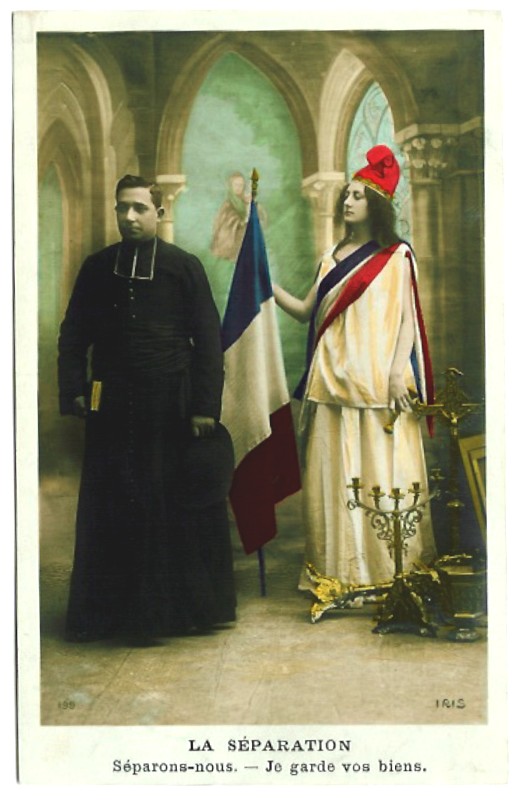
In 2005 the French Republic has celebrated the centennial of the law of separation between the State and the Churches.
What was this law? What are the stakes today for France, for Europe and for the World with the growth of Islam?
The French philosopher and politician, André MALRAUX said: “ The twenty-first century will be religious or it will not be.” Was he right?

A lecture by
Father Laurent DEMETS, FSSP

Thursday October 26th 2006
At 7:30 pm

Saint Francis de Sales Catholic Church
587 Landers Drive
Mableton GA 30126

dimanche, septembre 24, 2006

Sermon for the 16th Sunday post Pentecost

Hotel-Dieu de Beaune
Healing of the man with dropsy

Once again, Our Lord silences the Pharisees by asking a simple question: “Is it lawful to heal on the Sabbath day?” Always quick to tell us what we must do and what we must not do, now the Pharisees remain silent. What? The doctors of the law, the wise men who are supposed to teach the people of God don’t know the answer to this easy question? “Is it lawful to heal on the Sabbath day?” They are too embarrassed to answer. It has to be said that it is not the first time that Our Lord asks this question. Those of you who came to Mass yesterday or who read their missal remember the gospel from Saint Luke, chapter 13. Jesus had healed a woman and the chief of the synagogue had become indignant. Jesus’ retort was cutting: “Hypocrites!” Saint Luke relates that “the people rejoiced for all the things that were gloriously done by him” while the Pharisees “were ashamed.”

Now Jesus asks them again if it is lawful to heal on the Sabbath day. This episode takes place in Chapter 14 of Saint Luke, so, probably a short time after having been admonished. It is reasonable to think that they are not very comfortable in this situation.

Our Lord is a good master and a good teacher. His purpose is certainly not to belittle them, but rather to help them understand what the true law is supposed to be. The Pharisees knew the Law of Moses perfectly, but they have forgotten its true spirit. Year by year, they had changed the religion of their ancestors into a set of rules and obligations so restricting that very few, almost none, could fulfill them. By coming among us, the Incarnate Word didn’t abolish the law but He fulfilled it. For this, he gave a new commandment, the precept of charity.

Dear Brethren, we have to recognize that there is a tendency among many traditionalists to forget this precept of charity under the pretext of keeping the Tradition. This is obviously wrong, because Tradition teaches us to be charitable, as the Church reminds us regularly throughout Her Sunday readings. Today, for example, we are told by Saint Paul to be “rooted and founded in charity.”

It must be well understood that attending the Latin Mass or wearing a veil or knowing your Baltimore catechism well will not save you, but the grace of God. In fact, grace doesn’t exist without charity. Even if they are formally different according to the theologians, they are practically inseparable. I am not saying that Latin, veils and catechesis are not important. Indeed, they are, but I am saying that we must not forget what is essential because it is the essence of our divine religion: charity! There is more glory in healing a dropsy on a Sabbath day, than in, hypocritically, keeping this day holy. We are not sanctified by the simple physical accomplishment of the precepts of God but by the quality we bring to the accomplishment of these precepts. In all our actions, we first need humility, which is signified by the parable of Jesus: “sit not down in the first place!”

Humility gives value to our actions while pride removes their merits. The book of the Imitation of Christ encourages us to humble ourselves: “Oh, what a lowly and humble opinion I ought to have of myself, and how little I ought to regard whatever good I may seem to have! How deeply I ought to submit myself to Thy profound judgments, where I find myself to be nothing else but nothing, altogether nothing.”

Contemplating the greatness of God helps us to realize our smallness. It is for this reason that Saint Paul pushes us “to comprehend, with all the saints, what is the breadth, and length, and height, and depth and to know also the charity of Christ.” Then the observation of our smallness is not an occasion of despair, but on the contrary, a motive of joy, because we are open to God Himself who can dwell and work in our souls. Knowing God’s love allows us to be filled unto all the fullness of God as Saint Paul asserts.

Dear Brethren, loving God is not so difficult, but we have to know Him first, which supposes from our part a certain mortification. None of us has an innate or infused knowledge of God, and we need to work and study, but first, to pray so that we can know Him and then love Him.

May Our Lady give us the courage and the strength to do it. May she teach us the way of humility, which supposes necessarily some humiliations. They are precious crosses we should accept gratefully. Then, let’s do everything with a true charity. This is the high road which leads to heaven.

dimanche, septembre 17, 2006

In doing good, let us not fail !


Sermon
for
15th Sunday
after
Pentecost
Once again, Saint Paul shows his nobility of soul in today’s epistle. We can only appreciate his words and praise him for his magnanimity and his good counsel. Nevertheless, let us keep in our minds that an epistle of Saint Paul is not only a beautiful painting that we can admire, but, most importantly, the word of God to which we should listen and apply. God Himself testifies of the value and the strength of his word. Psalm 118 says: “the beginning of thy word is truth.” It also says : “Thy word is a lamp unto my feet, and a light unto my paths.

As pilgrims moving toward our celestial homeland, we need the word of God in order to head in the right direction. The word of God is always available for us. We only have to open our Bible, to read it and meditate on it. Many non-Catholics do it every day. I hope you do too.
In fact, the word of God is also “living and effectual and more piercing than any two edged sword; and reaching unto the division of the soul and the spirit, of the joints also and the marrow, and is a discerner of the thoughts and intents of the heart.” (Heb 4,12) So, woe are those who hear the word of God but yield no fruit because they don’t follow it. Remember and heed the parable of the seed we hear every year on Sexagesima Sunday!

Today, the word of God given by Saint Paul reminds us of our duties as disciples of Jesus Christ. The epistle chosen by the Church for today is a perfect continuation of last Sunday’s epistle, taken from the Epistle to the Galatians in which the Apostle reminds us of the works of the flesh and the works of the spirit. We learn that the works of the flesh lead to perdition. Today Saint Paul urges us to “walk in the Spirit.” He invites us to change our behavior toward our neighbors.

Indeed, we like to criticize and to judge our neighbors. We like to show them that we are better than they. It even happens sometimes that we take pleasure from their misfortune. This is not exactly the mark of greatly noble soul. Saint Paul knows our bad inclinations and as a good master, he pushes us to act against them. Instead of being a burden to our neighbors, he asks us to lighten theirs: “Bear ye one another’s burden!”

But, it is not about helping a friend. Anybody can do this. No, we have to bear the burden of our neighbor, whomever he may be, even though we don’t have a natural liking for him. Saint Paul is very clear about this: by doing this, we fulfill the law of Christ.

It is not easy. It is a gloomy prospect. We like our own little comforts so much that we think we are enough of our own burdens. A short prayer for the others will be enough to keep our conscience clear. But that’s not walking in the Spirit. That’s not being a true disciple of Jesus Christ. That’s not the ideal of a Christian life proposed by the great Apostle who says again: “And in doing good, let us not fail.”

Too often we are tempted to say: “ It’s enough! I have already done so much.” Dear brethren, that is not true. We could never do enough good in comparison of the evil we have done. Just think, we can’t even make a perfect and just reparation for one mortal sin. Fortunately, Christ did it for us, but it is not a reason to give up our efforts and sacrifices.
No, dear Brethren, it is never enough. We must continue to do good until our last breath. We have to be brave. We have to be generous. We have to be strong. Be sure that God gives his grace for this.

May Our Lady help us to fulfill the law of Christ. May she inspire us the good things to do for the love and the glory of God.

mardi, septembre 12, 2006


Fete
du
Saint Nom de Marie
Saint Alphonse de Liguori
Les gloires de Marie, chap X
DOUCEUR DU NOM DE MARIE


- Combien le nom de Marie est doux pendant la vie et à la mort.

L'auguste nom de la Mère de Dieu, le nom de Marie, n'est pas d'origine terrestre ; il ne fut pas, comme les autres noms, inventé par l'esprit des hommes ; il ne lui fut pas donné par livre choix : descendu du ciel, il lui fut imposé par un décret divin ; ainsi l'attestent saint Jérôme, saint Épiphane, saint Antonin et d'autres auteurs.

" Le nom de Marie, dit saint Pierre Damien, fut tiré du trésor de la Divinité ". Oui, ô Marie, ajoute Richard de Saint-Laurent, votre nom sublime et admirable est sorti du trésor de la Divinité ; les trois personnes de la Trinité sainte vous l'ont donné d'un commun accord, ce nom qui éclipse tous les noms après celui de votre Fils ; elles l'ont rempli de tant de majesté et de puissance que, quand il est prononcé, il faut que tout se prosterne pour le vénérer, au ciel, sur la terre et dans les enfers ". Mais, sans parler des autres prérogatives que le Seigneur a voulu attacher au nom de Marie, considérons ici combien il l'a rendu doux aux serviteurs de cette céleste Reine, soit pendant la vie, soit à l'heure de la mort.
Premièrement, le nom de Marie est doux à ses serviteurs pendant leur vie. Le saint anachorète Honorius le trouvait plein de tout ce qu'il y a de douceur et de suavité en Dieu ; et, pour le glorieux saint Antoine de Padoue, ce nom avait les mêmes charmes que saint Bernard trouvait dans celui de Jésus. " Le nom de Jésus, avait dit Bernard, le nom de Marie, reprenait Antoine, est une joie au coeur de ses pieux serviteurs, un miel sur les lèvres, une mélodie pour leurs oreilles ". Le vénérable Juvénal Ancina, évêque de Saluces, goûtait, en prononçant le nom de Marie, une douceur sensible telle, dit son historien, qu'il s'en léchait les lèvres. On lit la même chose d'une femme de Cologne : " Je ne prononce jamais le nom de Marie, assurait-elle à l'évêque Massilius sans que mon palais soit flatté d'une saveur supérieure à celle du miel ". Massilius adopta sa pratique la même douceur.

Lors de l'Assomption de la Vierge, les anges demandèrent à trois reprises quel était son nom ; on peut le conclure de ces trois passages des Cantiques : " Quelle est celle-ci qui mont du désert comme un nuage d'encens ? - Quelle est celle-ci qui s'avance comme une aurore naissante ? - Quelle est celle-ci qui s'élève du désert, nageant dans les délices ? " Pourquoi, se demande Richard, pourquoi les anges répètent-ils tant de fois leur question : Quelle est celle-ci ?. . . C'est sans doute, répond-il, afin d'entendre répéter le nom de Marie, tant ce nom résonne délicieusement à l'oreille des anges eux-mêmes.

Mais ce n'est pas de cette douceur sensible que j'entends parler ici : il n'est pas donné à tous de la sentir ; je veux parler d'une douceur spirituelle, d'un sentiment salutaire de consolation, d'amour, de joie, de confiance et de force, que le nom de Marie inspire communément à ceux qui le prononcent avec dévotion.

L'abbé Francon dit à ce sujet : " Après le saint nom de Jésus, le nom de Marie est si fécond en biens de tout genre, que, ni sur la terre, ni dans le ciel, on n'entend prononcer aucun nom qui remplisse les âmes dévotes d'autant de grâces, de consolation et d'espérance. En effet, continue le même auteur, le nom de Marie renferme je ne sais quoi d'admirable, de doux et de divin, qui fait qu'il ne peut retentir dans un coeur aimant sans l'embaumer d'une odeur de sainte suavité. Et voici, dit-il en finissant, la merveille de cet auguste nom : mille fois répété, il paraît toujours nouveau à ceux qui aiment Marie, aussi bien que le plaisir avec lequel ils l'entendent ".

lundi, septembre 11, 2006

Sermon for the 14th Sunday after Pentecost

Basilique Royale Saint Denis
Our Lord Jesus Christ asks us to have more confidence in God. After all, is He not our Father? God already takes care of His creation. He feeds the birds. Are not we of much more value than they? He clothes the lilies of the fields and he wouldn’t do it for us?

Dom Paul Delatte, who was the successor of Dom Gueranger in the Abbey of Solesmes, marveled every times he considered how much God cares and provides for His creation and most particularly for us. “ Man, this creature who is nothing and void is worth such immense consideration? Why such an amazing respect? Why do the hands of God become so tender? Is it because of the universal law of respect by which God treats all of His creatures, and especially the human creature, as the book of wisdom says: ‘ Thou disposest of us with great favor’ ?

We can wonder why God pays so much attention to us. The answer is certainly a mystery, but we can say that not only has God created us, but He has also adopted us. We had the opportunity, during the Sundays in summer, to hear Saint Paul speak of our filial adoption by God. He made us His children.

Today, with very simple words that everyone can understand, Jesus simply asks us to act as true children of God. A child knows that his parents are going to feed him. He knows that he has a house where he can live, eat and sleep. His parents supply his natural needs so a child can enjoy life without worries. Oh, the happy time of childhood!

Now, look at the Saints! Don’t they have the same carefreeness as children do regarding these earthly concerns of sustenance? They have heard and understood the words of Christ: “Be not solicitous therefore, saying, What shall we eat: or what shall we drink, or wherewith shall we be clothed? For after all these things do the heathens seek. For your Father knows that you have need of all these things.” They followed this exhortation perfectly: “Seek ye therefore first the kingdom of God, and his justice, and all these things shall be added unto you.”

The search for the kingdom of God! This is what has motivated their life. This is what should motivate ours. What is the kingdom of God and its justice? It is the glory of God and salvation of souls as Saint Ignatius of Loyola recalls for us in his spiritual exercises which I strongly recommend that you to do. At the very beginning, Saint Ignatius tells us what “the principle and the foundation” is: “Man is created to praise, reverence, and serve God our Lord, and by this means to save his soul.”
This should be the rule of our life that we should keep in our minds 24 hours a day. Then, Saint Ignatius develops: “ And the other things on the face of the earth are created for man and that they help him in prosecuting the end for which he is created. From this it follows that man is to use them as much as they help him on to his end, and ought to rid himself of them so far as they hinder him as to it.

In other words, God has created us for a very precise end, and He gives us the means and help so that we can reach this end. Now, it is up to us. Do we want this end? If we do, then we have the things of creation in order to achieve it. If we don’t, that means we change God’s plan for us and make creature our end. Then Mammon – whatever it is – becomes our master. We prefer the creation to God Himself: this is sin! A sin is giving our preference to a creature rather than to God and to decide to make it an end rather than the means.

If you choose God as your end, then you can be sure without any doubt that He will take care of you and will give you everything you need in your life. Understand well: everything you need to reach your end, which is, first His Grace, and then means of support. In fact, He will give you even more, because He is a good Father.
What is also true is that the search for earthly things, when it is done for themselves and not for God, is a dangerous trap for souls. The world understands this very well and knows how to hypnotize us with commercials and advertising slogans. Don’t let it pollute your soul. Take a stand against it. God is your master. Don’t replace Him with another one.

May Our Lady help us to choose the good Master and to follow Him everywhere, especially on the Cross. She is also a Mother; a very good Mother who loves us.

vendredi, septembre 08, 2006

To think with assent

Abbaye de Murbach ( Alsace )

Sermon for the 13th Sunday after Pentecost


Today’s liturgy obviously highlights the fact that we are saved by Faith. The corporeal healing of the lepers is an image of our spiritual healing performed by Our Lord Jesus Christ. Since Faith is necessary to be saved, it might be good to think about this supernatural virtue in order to invigorate it. Our eternal destiny is at stake.


According to the definition by Saint Augustine: “ to think with assent ”, Faith is the act of believing. From this definition, we can already say that Faith involves our highest human abilities, which are our intelligence and our will. Believing is an act of reason, even though its object exceeds reason. Our will, also, is involved. Only someone who wants to believe believes. A good understanding of what Faith is shows us that it is first a matter of intelligence, and not a matter of feeling. We can only deplore the modern error which consists in feeling God and which contradicts the teaching of the Masters of the spiritual life and a sound theology. Of course we would like to feel God and to enjoy His presence. It is perfectly legitimate, but the fact is that we are children of Adam and Eve and as such, we are born with the consequences of original sin. One of them is a certain deprivation of God. So, finding God is a difficult road and would be almost impossible without Revelation and His grace. Faith is precisely our answer to Revelation. By it, we believe in what God has revealed.


Now, many Christians, when speaking about their Faith, say that it is a personal encounter with Jesus or God. We don’t want to deny this “definition” which is not a definition, by the way, but rather a description. It is true that in the process which leads to Faith, there is a certain meeting with God, but it is important to further clarify what Faith is. Actually, many people seem to greatly exaggerate the sensible angle of this meeting with Jesus. Most certainly, there are some special cases such as Saint Paul’s conversion on his way to Damascus. Certainly almost all of us have felt Our Lord’s presence in one way or another, or perhaps have even seen Him. Very well, but all the spiritual writers warn us: if it happens, thanks be to God, but it is certainly not the most important thing in our spiritual life. We must believe in order to be saved, but nowhere it is said that we must feel God. Furthermore, the act of Faith, since it is subject to the free-will in relation to God, as Saint Thomas explains, is meritorious.


Jesus Himself teaches that Faith is the principle of supernatural life in a soul. Six times in the Gospel of Saint John, He says: “ He that believes in Me has life everlasting.” In the same Gospel ( 17,3) He says: “Now this is eternal life: That they may know thee, the only true God, and Jesus Christ, whom thou hast sent.


So eternal life is a knowledge. It is the knowledge of God and of Jesus Christ. This knowledge will be the beatific vision in Heaven. For now it is Faith. Only those who have Faith now will see God in Heaven.


We certainly know this truth, but what about its impact in our daily life? The fact is that unfortunately, many souls are not very concerned about their Faith. They have been spiritually healed by Jesus, but they are like the nine lepers of the Gospel who went away and didn’t give glory to God. Their Faith is not the principle of their spiritual life as it should be and instead of being a developing mustard seed, it is only a kind of hazy option in their life. They cannot relish the spice of Faith and it is not very surprising when, in the end, they give it up alltogether.


Having Faith involves many things, and first of all, a conversion of our life. I said a conversion, but, rather, I should say some conversions. In fact, spiritual theology distinguishes in fact 3 conversions which have been well explained by Father Garrigou-Lagrange. The first one is justification, which is a change of state: the change from the state of sin to the state of grace. This change cannot be done without Faith. The second conversion, which is the entrance into the illuminative way, goes with a purification of senses. It is a necessary stage toward perfection. As Saint John of the Cross points out, at this time, the soul feels no consolation even for Divine things. It is hard and the soul feels a certain dryness, but a pure Faith keeps it faithful to God. Prayer become a contemplation inspired by a pure Faith.


The third conversion is the entrance into the unitive way, which is the way of the perfects. It goes with a purification of the spirit. God removes all imperfection from the soul. At this point, as Saint John of the Cross says, “ the soul walks blindly with a pure Faith, which is a dark night for natural faculties.” You feel darkness and aridity, but Faith strengthened by the gift of intelligence, illuminates your life. The fruit of this conversion is a great love of God.


So, as you can see, Faith is necessary for the three conversions. It is the principle of life which leads you from the state of a sinner to glorification. Then it will make way for the beatific vision. The danger of placing too much importance on feelings can result in the temptation to give up religious practices when the time of purification comes. Unfortunately, it happens sometimes to be the case.

Dear Brethren, you have the duty to protect your Faith and your means of doing this are prayers, the Sacraments and study. Remember this, especially during your examination of conscience before confession. Neglecting to nourish your Faith would be sinful and harmful to yourself.
One day, Jesus Christ told you: Arise, go thy way; for thy faith hath made thee whole. Now, don’t forget to give glory to God.


May Our Lady help us to keep our Faith pure and strong, so that it will remain in us the principle of our life until the day when we see God.


dimanche, août 27, 2006

Ament et cantabunt !


Being the work of God Creation expresses His perfection and His glory. The glorification of God is indeed its first raison d’être and the Scriptures, especially the Psalms, relate that earth and heavens proclaim the glories of God. The canticle of the Three Children, in the Book of Daniel, is a beautiful invitation to all the creatures to sing the glory of their Creator: All works of the Lord, bless the Lord: praise and exalt him above all for ever. Then all the creatures, one by one, are invited to glorify the Lord; angels and heavens, waters and powers, sun, moon and all the stars, fire and heat, cold and frost, ice and snow, animals and men are asked to unite together for the praise of God.

Now, there is one thing that we have to take into consideration. Every creature glorifies God according to its own nature. So, a stone glorifies God as a stone, a dog as a dog, a flower as a flower and so forth, and of course, it goes without saying that a man glorifies God as a man, or at least, is supposed to glorify Him as a man. I don’t know if you have well realized it, but God has given us a wonderful faculty, which is language, and, let us be more precise, human language.

So, it is with and by our human language that we worship God. This language is not a necessary condition to do this. First, we should be worshipers in spirit and in truth, which involves our soul and its main abilities: intelligence and will. At this point, speech is not necessary. Some people are deprived of this ability, and yet they can be true worshipers. But now, since a human person is a body and a soul, the interior acts of our soul must be manifested externally by our body. Besides, most of the time, we do this naturally and spontaneously. We have just to look at the face of someone to know if he is happy, sad, scared, angry or annoyed. Consequently, our reverence and our adoration for God must be expressed physically by our attitude, our postures and our words. It is the way, for us human beings, to worship God as men. We are neither parrots nor angels and our adoration cannot be satisfied with mental prayers only or vocal prayers only. Speech is our principal natural means of communication, and once again, we worship God according to our nature. It is already true for the private prayer. It is even truer for the public prayer which we call the holy Liturgy according to the definition given by Pope Pius XII. The Liturgy is a public act of adoration offered to God by the Church which is a society composed of men. I am speaking now just about the Church on earth and her liturgy in our present condition.

So, dear brethren, we have to participate in the Liturgy as men, by using our human faculties of expression which are words. They can be said or sung, but they certainly cannot be mumbled, whispered or murmured. In other words, you are asked to speak and to sing clearly by using well the abilities that God has given to you and not by buzzing like a fly or a bee. Flies and bees worship God in their own way; we do in our own way as men.

And I really don’t think I ask you something difficult. In fact it is not me who asks you this, but the Church and with simple good sense. I am even surprised myself that I have to preach on this subject today, but the fact is that we must improve in this parish regarding this matter. Some of you have already made some efforts, and I would like to thank you for trying to make our Liturgy more reverent and more beautiful. And I am sorry to tell you this, but whispers, murmurs and buzzing are not beautiful. You can use them for gossiping or conspiring behind the backs of people, but not for worshiping God, at least now. Maybe, one day, when persecutions will come, it will be necessary to worship God in silence, but it is not yet the time.

God deserves to be worshiped and to be well worshiped. That supposes on our part some efforts which is, in the end, not terribly difficult. Almost everybody can speak clearly and articulate well, and by the way many do it very well 5 seconds before or after Mass in the vestibule, or even sometime during Mass.

Many of you pray the Rosary before and after Mass and this is a good thing. You pray well by speaking clearly during this prayer, so I wonder why you don’t speak clearly during Mass. And I remind you that even though the rosary is a very good prayer recommended by the Church, it is still a private prayer, while Mass is the public prayer of the Church. So, I am glad that you do some efforts to pray the rosary, but you should do more efforts for the Holy Sacrifice of the Mass. The efforts asked are just to speak naturally at the same volume as the priest, as you do during a usual conversation. Only the priest has some prayers that he says in a low voice, because he acts in the name of Jesus Christ, sacrificer and victim. He offers the Sacrifice directly to God for all of you and doesn’t need to speak loudly for this.

Now there are times we do celebrate a true low Mass, which is when the priest celebrates in a low voice the entire Mass. It is a beautiful way to celebrate the Sacrifice of Jesus which is sometimes necessary when for example two or more priests celebrate at the same time in the same church. It is a beautiful way to celebrate Mass, especially when you are in an old XII century church, early the morning, worshiping God under the Romanesque vaults of an ancient abbey sanctified by many generations of monks. There, the stones pray with you and with the awakening nature outside. You can feel the memory of the place and words don’t have to be necessarily expressed. Such a way of celebrating Mass pushes us to contemplation and to raise our souls toward God.

There are other ways to celebrate Mass. High Mass is one of them and is recommended by the Church especially for Sundays and Holy Days of obligation. As for a low Mass, the Church wants the congregation to participate in the Liturgy. Pope Pius XII wrote that the fruits of such participation can only be good if we follow the teaching and the rules of the Church which provide against abuses and errors. It is true and I could experiment with it myself.

I remember especially one occasion among others about 16 years ago. I just had recently discovered the traditional Liturgy of the Church and started to go to Mass after many disappointments due to Novus Ordo Masses not very well said. I found these Masses boring and people didn’t seem to realize what they were doing while they attending them. So, this day in Paris, I could clearly see the difference between a true Catholic Liturgy and another way of worshiping which doesn’t attract many people. The rector of the Basilica of the Sacred Heart of Montmartre had given authorization to have a benediction of the Most Holy Sacrament one Sunday afternoon after a walk for Life in Paris. It had to be done after the regular Vespers of the Basilica which are in French according to the new Liturgy. Many hundreds of traditionalists arrived for this benediction and I was among them. It was still the Vespers and dozens of people, not very young, were trying to sing the Office in this big Church still full of empty seats. It was not very attractive and I thought it was a quite sad.

Then, came the time for our Liturgy. The church became suddenly filled with many young people carrying banners and singing at the top of their voice traditional canticles such as Lauda Jerusalem, O salutaris Hostias, Tantum ergo and so forth. The difference was amazing and I thought that Tradition is very much alive and will go on in the future because of its enthusiasm, its vitality and its youth. Those of you who went to the pilgrimage of Chartres have probably felt the same thing during the Mass at the Cathedral when 15,000 people sang the Kyrie, Gloria and other canticles.

Unfortunately I don’t feel the same thing here in the parish during our Masses our holy hours and I wonder why. Why they don’t sing here at Saint Francis de Sales? There is certainly a reason, but I don’t know it. Why do people sing when I say Mass at the Cathedral, or in Chatanooga Tenessee or anywhere else in the world, but not at Saint Francis de Sales church? Some of you sing and have made some efforts, but the others? So many of you remain silent or sing so low that we hardly hear them.

Singing and music are something important. They express human feelings and reflect what a society is. Music is rhythm and there is no life without rhythm. There is rhythm in walking, respiration, heartbeats. So nature is full of rhythm. We, as rational creatures, have the ability to make rhythm an art and even a prayer. And it is something very natural. Singing is peculiar to men and a baby know how to sing before he knows how to speak. Any good teacher or good pedagogue would tell you the importance of chant in the education of a child. It helps him to stand in a group or in a society and to form his memory.

I am sure that you all remember at least one song that you sing sometimes. It can be the number one song of the hit-parade of the year you fell in love with your wife, a song that you used to sing at the university or in the army, the song of the soccer world cup or anything else. Well, what about a chant which has marked your faith?

Few years ago, I was director of a summer camp for teenagers in France. The main activity of this camp was music. At the end of the camp, after only three weeks, we gave a concert of sacred baroque music and an opera. Our children were able to sing an entire Sunday Mass with Gregorian chant and polyphony. I remember how funny it was when we went to visit certain places during the camp, such as a medieval village or a navy boat. Our children were singing the Gloria Patri from a Mass by Marc-Antoine Charpentier and I can tell you that we didn’t pass unnoticed. People asked us: who are you? This was an occasion of apostolate for us.

It also happened many times during our summer apostolate in Europe when we would say Mass in the church of various villages. Every time, I saw some inhabitants of these villages who attended our Mass crying. I could her them singing with us the Kyrie and other pieces. They just were so moved to tears by hearing the Mass of their childhood that they haven’t heard for 40 years. But they remember it very well because Faith at this time had really built a culture which was expressed by the Liturgy. You could go in any villages until the Fifties, all the parishioners, who were almost all the inhabitants of the village, knew at least three entire Kyriale and different pieces they could sing during processions, vespers or Holy Hours.

So, dear Brethren, I guess you could understand how much it is important to live our Faith, and not only to live with Faith. That makes a major difference which can be the compost and the ferment of a new Catholic society. Our Faith should impregnate or culture and our society. Singing is a wonderful and powerful vehicle for this, as history and sociology show us.
I will finish with one quotation from Saint Josemaria Escriva Balaguer and a question: “the Church sings because Her speech in insufficient for her prayer. So, you, as a Christian, you must learn liturgical chant and you must sing at the top of your voice.”


In the Benedictine monastery of Flavigny in France, it is written on the floor at the entrance of the church:
Ament et cantabunt! Let them love and they will sing !

So, here is my question: if you love God, why don’t you sing?

mardi, août 22, 2006

Sermon for 11th Sunday after Pentecost

One God's marvel, and not the least:
CORSICA
Saint Paul’s epistle for this Sunday follows and completes what we said last Sunday about the necessity of recognizing God’s gift. A certain false conception of humility can push some people to deny their qualities, which is a denial of themselves and of God. Whether they simulate their humility or whether they are in good faith, they are wrong, and even blameworthy for the first ones.

A truly humble person recognizes himself as he really is, because humility allows us to see the truth. We have the perfect and most beautiful example given by Our Lady when she proclaims her Magnificat. She knows, acknowledges and proclaims that God has regarded her humility and henceforth, has done great things to her. Saint Paul also recognizes his title of apostle. Neither Our Lady nor St. Paul falsely say that they are nothing and are very conscious of their privileges, but they attribute them to God. It seems to be bold, but it is simply truth. Saint Paul says it clearly: “But by the grace of God, I am what I am; and his grace in me has not been void.”

I think we should and we must be more grateful for the graces of God, first by recognizing them and then by using them for His glory. He accomplishes so many marvels in us that we cannot remain mute. The problem is that most of the time we don’t see them. The reason for our blindness is a lack of a spiritual life which prevents us from recognizing God’s work in us. Yet, we are like the deaf and dumb man of the gospel, and one day, Our Lord has opened our ears too, but it was the ears of our soul. We have received the grace of being able to hear God and to proclaim His marvels but for some reasons such laziness or cowardice, we refuse to listen to Him and to proclaim His Gospel.

The day of our Baptism, Jesus told us: “Ephepheta!” Be you opened! Be you opened to my grace and to my voice so that you will be able to recognize me when I visit you. Alas, the ears of our soul, opened by God’s grace can be closed again by our bad will. Then, we don’t recognize the marvels of God and consequently, we consider our religion as a set of rules and laws which soon become a burden. And when we consider this burden too heavy, we finally give up our duties toward God.

Thus, we have been made able to participate in his sacrifice by our Baptism, but instead of uniting ourselves to Jesus on the Cross, we content ourselves with just attending Mass, because it is a duty. Don’t you understand that it should also be, and mainly, an act of love? It happens sometimes that some people complain, because the Mass is too long. They think it is too long, but they are wrong. How long did Jesus remain nailed on the Cross? Probably too long, don’t you think? If only we could understand, as much as we can, and acknowledge what a marvel the Holy Sacrifice of the Mass is, such a thought has no place in our minds, and if by chance Satan tempts you in this area, an act of Faith and of Charity can easily reduce the efforts of the tempter to nothing. But in fact, it will not result in nothing but it will instead be a small victory, because a temptation we have overcome allows us to increase our love for God and to strengthen our will.

Sancta sanctis! This old acclamation from eastern liturgy means “ holy things for holy people.” There are different meanings we can find for this sentence, but one is that only holy people are able to recognize holy things. So, if you don’t marvel every day while considering God’s work, it is because you are not holy enough and you cannot recognize His work. God does great things every day, but because you are not opened you cannot see them. And I bet you anything that your life is not so different than the life of pagans and non-believers. Your eternity will probably not be different too.

So, let us turn to Our Lady and pray to her so that she can help us to open our soul to God. Let us learn from her what humility is. Then, God will do great things to us, and first, he will save us!

lundi, août 14, 2006

Sermon for 10th Sunday after Pentecost


Dear Brethren,

Let me ask you a question: is there anything you have that was not given to you by God? Since you all know your catechism, I already hear you saying: “No, of course not!” Now, let me ask you another question: then, why do you act as if it were not given by God?

At this point, you might be not understand what I am saying. Let us be more clear. You have received everything you have from God. Each one of you can draw up a list of your own gifts: your life, your supernatural life, which we call Divine Grace, your natural gifts or talents, your spouse, your family, your home, your car, your daily food etc… In one way or another God is at the origin of whatever you have, even though you don’t necessarily think of it in your day to day lives.

We believe – it is a Catholic truth – that everything comes under God’s government. Consequently, if you have such and such a gift from God, it is because there is a good reason. First, consider your life. You didn’t came to the existence by mere chance, but because God wants this. You don’t have a certain ability or a certain handicap by a kind of whim of fate. You don’t even have a certain material good just because you deserve it or because you worked to obtain it, but also because God allows you to have it. We don’t deny the existence of secondary causes and freedom of will, but we simply recognize that God’s Providence is a reality, as the Church teaches. Once again, everything comes under God’s government or Providence.

So for what reason do you have so many gifts from God? Let me answer by asking another question. Why do you exist? Since you still know your catechism I hear you again answering: “ because God has created us in order to worship Him, to serve Him and to love Him.” So, here you have the answer for the previous question. Everything you have is for the glory of God and I would add, not only every thing you have, but also everything you are, your very being. Nothing is for you! All is for God.

At the light of today’s reading, I see two lessons we can learn from this truth. First, we should be humble like the tax collector of the Gospel. Sins are truly ours and the worst is that we use God’s gift to offend Him with our sins. If you do good, like the Pharisee, then consider that the good you do comes from God and this good is for His glory, not ours.
The second lessons is that there is absolutely no reason to be jealous of the others. Their gifts, their talents and their possessions are for God’s glory. If they use them for this purpose, we should rejoice. If they don’t, we should be sorry and pray for them. But be sure that God gives you what you need. If He gives you more, then be prudent and use this surplus for his glory.

Let us turn to Our Lady and ask her to give us wisdom, so that we can make good use of gifts with humility and gratitude.

mercredi, août 09, 2006

The Art of Confession

Foreword

The following text is a translation of an article by Father Chery, O.P. Father Henri Charles Chery was a French Dominican priest who wrote many books and articles in the 40’s and 50’s. His writings about the “Christian” sects are particularly interesting. His tracts about Jehovah’s Witnesses, Anabaptists, Quakers, Christian Scientists, Rose Cross and so forth give us much information that can help us to deal with the problems of these sects. Another part of his work concerns the Liturgy.

This article was published in the French review of the Fraternity of Saint Peter, Tu es Petrus, in the issue of July 2005. I want to be most faithful to the original French version. May Our Lady, Refuge of sinners, help us to benefit from the reading of this text for the good of our souls.


Father Laurent Demets, FSSP


Introduction

These lines are neither for the “great sinner” who comes to Christ to relieve his conscience from a heavy burden, nor for the Catholic of the annual Easter confession. But they may offer some usefulness to the person who has the “habit” of weekly, semi-monthly or monthly confession.

“Habit”: an untainted word if it refers to a commendable regularity or a word sadly blackened if it refers to a mindless routine. Unfortunately, every one knows that a commendable regularity can easily degenerate into thoughtless routine. Most of the penitents are upset by the miserable commonality of their confessions and by the little fruits they bear by them and even sometimes by the little interest the confessor shows in giving exhortation when they come to see him. Many take a dislike to this, then confess just by habit or settle for spacing out their recourse to the Sacrament of Penance in a detrimental manner for their spiritual progress.

Does not this dislike and its consequences come because they don’t know how to confess? There is a manner, an “art” that would make this exercise a profitable way of sanctification. By writing these lines, we think especially about the young people, the young Catholic in action, young families, who try to live an authentic Christianity with a generous effort of sincerity. They are not yet formed in the art of confession, and suffer the threat of becoming hardened. They have a horror of routine and they reject formalities. They are right. But they must know that formality comes by the fault of “the customer”, so to speak, and that it depends on them to keep intact their religious vitality or to let it deteriorate for lack of personal effort.


Rites are bearers of life, but only for the living.

The use of confession, if it is well understood, can be a serious support for growth in the spiritual life.

Warning! Confession is not all; contrition and absolution are more important!

But first, because we are speaking about confession, which is our topic, and only about confession, it is to be carefully noted that it is not the whole of the Sacrament of Penance, or even its main element. This Sacrament comprises regret, confession, absolution and reparation. It is essentially constituted by the absolution, which relieves the fault of a repentant heart. So, if a penitent – on his death bed, for example – is unable to express his confession, the Sacrament can work without this confession, but it cannot work without contrition. God, on his part, can dispense with the Sacrament in the absence of any qualified priest being available, but He cannot save a soul in spite of itself and forgive a sin that one refuses obstinately to regret.

People who think their accusation is the main part should remember this. Let the priest exhort them to contrition and to the means to be used for not falling again in their faults, and yet they seem not to pay close attention to him once their confession is made. Rather, they are distracted by their concern to state any sin they have not yet confessed. If it were a grave fault, it would be normal to express it before leaving, but most of the time, their concern is only about venial sins. One worries about being complete; one should rather worry about being contrite.

Consequently, during the few moments we ordinarily take to prepare ourselves for the following confession, we shouldn’t take all this time for the examination of conscience, but rather to implore the grace from God to obtain a sincere regret of our faults and to express our contrition and our intention to not fall again.


Confess to whom?

To whom will I go to confess?
First answer: to a priest! I use these words on purpose to emphasize that we must attach the prime importance, in the use of the Sacrament of Penance, not to the qualities of the man who hears the confession, but to his quality as Christ’s minister. Because we are lacking in faith, we pay excessive attention to the human value of the confessor, which could be a real and objective one or one that our liking and confidence confer to him. We don’t deny that we have to take this into consideration, but on a level standing on the fringe of the Sacrament, so to speak. It will have a role for the advice following the accusation and preceding the absolution, but the Sacrament is not constituted by the advice and can even be absent of it. The matter corresponds to Christ who holds the forgiveness; the living Christ who acts in His Church. Any priest who has received from the Church the power to validly absolve, acts in persona Christi, in the name of Jesus Christ. He opens for your soul the source of forgiveness, which is the blood of Christ the Redeemer, and he cleans it with this blood.

So penitents are wrong because of a lack of faith, when they defer freeing themselves from a grave sin or postpone indefinitely the confession that would free them from a growing uneasiness ( through purifying the sources of infection that spread ) because “their confessor” is away.

If they had the comprehension of what this Sacrament is, especially in its purifying work independently of the quality of the priest who administers it; if they understood that the priest is, first of all “minister of Christ”, that is: the ear of Christ to listen to the confession, wisdom of Christ to judge, mouth of Christ to pronounce the removal; they would give less importance to the human appearances and would not postpone their confession.

Now it is the time to say why I should confess my sins to a priest instead of contenting myself with a confession directly expressed to God in the depths of my heart. It is because I am a member of the Church.

My fault has offended God and injured myself. It is a breach of the love I owe to my Creator and of the virtuous love I should have for the child of God that I am. But my fault also has damaged the Church, the Mystical Body. “Every soul that rises, raises the world.” Every Christian who demeans himself thwarts the Christian community’s perfection. The most obscure sin wounds the tree of which I am a branch. If I totally break away from this tree by a mortal sin, or if only I separate a little bit, the entire tree suffers. I am responsible to the Church in my vitality, because God has entrusted for me his graces to the Church, the body of Christ. So, I must be responsible to Her to overcome my fault. During the first centuries, this responsibility to the Church appeared more manifestly, when the accusation was publicly done in front of the community. Now the discipline has softened, but it is still in front of the Church that I accuse myself, in the person of the priest who hears me, and it is from the Church I receive the reconciliation by the ministry of the priest who absolves me.

So, I confess to a priest because he is a priest. This doesn’t prevent me from choosing a confessor humanly able to understand me and to advise me. We are not speaking now, because it is not our topic, about what we call (maybe a little bit improperly) “spiritual direction”. Even by strictly remaining on the level of the confession, it is surely better for the progress of the soul, that it habitually uses the same confessor. After a while (provided that one follows the advice given about how to confess) the confessor knows who he deals with. He knows your tendencies and your usual weaknesses. Even though you just have a little to say, he knows what point is good to insist on in his exhortation. You have shown little by little the difficulties you struggle with and your own situation and you don’t risk being led astray by an inopportune remark, by a stranger who may misinterpret your situation. At a difficult time of your life, he can stop you on a slippery slope. Anytime, he can suggest to you the right decisions and free you from your spiritual indifference if you fall asleep.


How will you choose him? First, for his straight sense and his reliable judgment. If it is possible, holy – it is clear – but a stable and discerning priest is always preferable to another of a more fervent life but with a less well-balanced judgment. Don’t forget that he is an adviser and as is the wisdom of the adviser such is the advice. But he is a trainer too and you should want him to be demanding. A soft confessor, who would be content with deluding you with lenient words or with sending you away with the absolution and a general exhortation, would take a risk of letting you wallow in your sins or your serious imperfections. And that’s why you must, if necessary, incite the confessor to this beneficial demand and humbly accept his instructions in the effort to change. You will remember that the first condition you must attain before he can be useful is that you trust him.

You may have the best confessor of your town, but if you don’t frankly confide in him, he can’t do anything for you. So, you will choose one with whom you don’t feel paralyzed by his presence and that you can readily consider as an understanding Father, interested in your case and able to deal with it, open to the realities of life, sure in his diagnosis and with a firm goodness in his advice.

If you don’t find him, don’t be distressed; go to any priest: he has the grace of his state and the Holy Ghost will even use him for your good, provided that you will listen to him.
If you find him, don’t change easily. Even though you remain fully free for another choice, don’t be disconcerted by any impressions, any blows to your pride or any demands. Persevere until there is evident proof that you are making no progress with him, in spite of an honest and constant effort on your part.

Which sins to confess?

I am now near the confessional, starting my examination of conscience. Which sins will I confess?
The question comes up, it is clear, for I would not pretend to accuse all my faults. “For a just man shall fall seven times a day” the Scriptures say. What about me, who is not just? How many sins do I commit every day? To be complete and to totally exact all my sins is an unrealistic dream and besides, useless. I must choose. But what shall I choose?


First, you must say all your mortal sins, of course. Refusing deliberately to accuse one mortal sin, even though you confess some others of the same gravity, would make the confession null and sacrilegious. A mortal sin is an act by which you turn away from God, your ultimate end, by willingly telling Him that it is all the same for you to disobey Him in a serious matter, so that you can satisfy your disorderly tendencies. So, how can you obtain the grace of God if you don’t repudiate a mortal sin, and then if you don’t confess it? You cannot be both in friendship and in hostility with God.
The difficulty, in certain cases, is to know when there is a mortal sin. In theory, everybody knows: grave matter, mindful of the serious wrong and full consent. In practice, we often wonder: was the matter grave? And more often: did I really consent? It is easy to ask your confessor about the first question. For the second one, the fact that this question comes to your mind and you honestly wonder in conscience and the fact that you are not absolutely sure bring the answer: there was not full consent. Does that mean you don’t have to confess this “doubtful” sin, or rather this sin “doubtfully committed?” Certainly not! You can legitimately permit yourself on the basis of doubt to come to the Sacrament of the Eucharist. Strictly speaking, there is no necessity to confess this sin. But if you want to make progress in the spiritual life, you would be wrong to take refuge behind this non-obligation when the doubt is a question in your conscience. Practically, the rule is very simple. You are not required to accuse yourself for having committed a mortal sin, but for having committed such sin or such act.

You can add, if need be: “I don’t know if I have fully consented” and that will be all right. There still will be a time for answering in conscience if the confessor asks you: “Do you think you committed a mortal sin by doing this?”

What about this phrase constantly used by certain people: “I accuse myself as God recognizes me as guilty[1]?” It can be used with good reason when you hesitate over the nature of your guilt, but it seems to be too easy and a little bit hypocritical when you know well, what it is about.
On the other hand, let us say to certain souls, that you don’t have to consider any sin as mortal. A sin that deserves separation from God for eternity and the pains of hell cannot be committed without a clear conscience of it. If your conscience has to be developed, you will ask your confessor for some explanations and you will firmly keep his advice. The development of the conscience should be made during childhood. Hearing children’s confessions, we are stunned by their aptitude for believing that some slight faults are mortal sins. By the way, is there not here a certain responsibility of the educators who should know how to proportion their scolding to the real value of the child’s fault? Anyway, the problem of the development of a child’s conscience should be well examined by parents and usual confessors, because it is dangerous to let children believe in the gravity of a slight fault as well as to let them consider as unimportant an act that is seriously reprehensible. A scrupulous and anxious conscience during childhood later makes an adult weak, apt to fail and without strength of character; or sometimes, as an aftereffect, a teenager who suddenly frees himself from an unbearable constraint.

Mortal or not, it would be better to confess the sins that lay the most heavily on your conscience, rather than slipping them in the middle of a long list of sins of less importance. Doing this you are sure to be freed from faults that otherwise you could fail to say because of a silly fear.

But I would like now to focus particularly on the examination and the accusation of venial sins. Is it not on this matter that most of the penitents accustomed to a frequent confession are the most deficient?
What kind of complaints do we often hear from these penitents? – “Confession bothers me because I always have the same things to say.” Or this, about the confessor: “He doesn’t tell me anything!” Understand: anything out of the ordinary that pushes you to shake yourself.
Well, the cause of these two defects that make confession psychologically tedious is the same: You don’t know how to confess!


How do most of the penitents confess?

Some penitents (only a few) forget that sin is an act and not a state, so they show (or they believe to show) the color of their souls by saying: “I am a liar; I am impatient; etc…” This way of expressing is improper. Saying it like this you indicate a tendency of your soul. But confession is not a statement of your tendencies: It is the accusation of precise actions, which are certainly the results of your tendencies, but different from them as the fruits differ from the tree. You can have a tendency to lie ( be a liar ) and have not told lies for the last two weeks since your last confession. If you have lied, you must say: “I have lied” and not: “I am a liar.”

Now, most of the penitents confess like this: “I have lied, I have lacked charity, I have been lazy, I have been vain, etc…” This form is more correct, but the accusation is hardly better. I mean, hardly profitable for your soul and hardly susceptible of obtaining useful advice from your confessor. Why? Because your confession is neutral. You didn’t need any particular thought and any efforts of resolution to do it. It doesn’t give to your confessor any particular description that permits him to see how your soul is different than the one he has just judged and advised before you. On ten penitents who follow each other, at least nine could show the same list – as a matter of fact, alas, they do!

So, why do you expect your confessor to give you the precise advice you need, advice for you and not for another? Your particular case is not revealed by your confession which gives him no means to grasp an understanding of you. He would need to be a wonderful and intuitive psychologist in order to guess, through this fast series of standard faults and through the screen of the confessional where he cannot see your face, to know what words he should tell you that could reach and encourage you to make the efforts you personally must make. We cannot expect all confessors to be a Curé d’Ars! Normally, a confessor will give you back what you have brought to him.

In addition, if the penitent begins a long listing, in which he wants to be exhaustive, and if he means to tell almost all the venial sins that one can commit – in fact that he has probably committed – so that the listing is said fast and lasts many minutes, then the confessor is totally bogged down and wonders: “Is there anything characteristic in this confession?” Thus, finding nothing particular, he just gives a general exhortation, which is hardly useful. Who’s to blame?

So, how do I confess well?

Let us first emphasize that venial sins are free matter concerning confession. You are not obliged to confess them. An act of contrition well done, a true act of love of God or the use of a sacramental with faith and humility qualify for obtaining forgiveness of them. Therefore, a confession which comprises only venial sins is not necessary for salvation. It is rather a way of sanctification. It is recourse to a Sacrament, by which we are cured and strengthened through the purifying blood of Jesus. It is also, secondarily, an exercise of humility based on the knowledge of yourself and the accusation of what holds up your spiritual progress. So, you are free to choose the venial sins you want to confess among all those you have committed.

Does that mean you will choose the slightest and push into the background the most embarrassing? No! It would be the opposite. A good examination of conscience should cause to emerge from the multitude of your daily sins, those which are the most dangerous for the vitality of your soul, because of their frequency or of their malice. The personal characteristic features of your own sinful soul are not similar to another soul’s, like your face is not similar to another. We all roughly commit the same sins, as we all have a nose, a mouth and ears. So the importance, for you, of such a fault, and the place it takes in your spiritual life and also its nearness to other faults of the same kind, is what compose your face as a sinner. This is what a skillful examination of conscience brings out. It is useless to accumulate a long list of sins in confession: five or six, well chosen, would be enough to see yourself and to show you as you truly are in front of God.

Now comes maybe the most practical remark. You still have to tell your sins with their own reasons and circumstances. “I have lied!” This signifies nothing. Psalm 115 says: Omnis homo mendax – every man is a liar. In what way did you lie? To whom? In what circumstances? Why?
“I have lied to a sick friend who expected my visit, because it annoyed me to do it.” This is a lie with a particular quality. “ I have lied in a salon by claiming that I have some relations which actually I don’t have; I have lied to my superiors in order to obtain a day off which I was not entitled to; I deceived a customer about the quality of my work in order to be paid more...” The simple confession “I have lied” would not give a precise idea of the quality of your sin.
“I have lacked charity” – the most common sin! Why do you use this neutral expression? Say rather: “I have said to someone I don’t like hurtful words, knowing that it would distress him” or “I have despised a classmate not very intelligent” or “I have refused to help a friend who was in need” or “I have made fun of a disabled person.”

There are so many ways to be vain. What about yours? Do you spend too much time for your grooming and dressing? Do you look at yourself in the mirror at every turn? Do you display your talent every time you are in company and try to attract attention by your brilliant conversation?
What about your laziness? How does it show up? By your obstinacy to stay in your bed when it is time to get up? By neglecting your duties and failing to accomplish what you are supposed to do? By your nonchalance in your behavior or an exaggerated love for comfort?

These few examples – we could find more – help us to understand what we mean when we say that you have to confess precise acts with the circumstances in which you have done them. Find the keywords which are the most capable of expressing your fault as it has really been committed by you and not by just anyone. It is for your own benefit. First, because it compels you to see yourself as you truly are; then because it is a salutary humiliation (it is more humiliating to say: “I have spent half an hour a day to make up my face” rather than: “I have been vain.”); and finally because your confessor can see the state of your soul from what you say and can give you suitable advice.

Having said this, you are not invited to chatter. Confessing with precision is not “telling stories.” Confession is not supposed to be drowned in a flow of accounts, explanations and digressions in which the penitent forgets that he confesses his sins and the confessor doesn’t understand what your sins are. Sometimes priests hear a so called confession as a justification or defense; sometimes as an evaluation about someone else; sometimes as a complaining about the hardness of the present time. It is quite legitimate to need to unburden your heart and to receive consolations, or to ask for explanations for your life. But in this case, separate the two matters: do your confession first by just telling your faults; then tell the priest that you have something else to say.

In what manner should I confess?

As we have already said several times, the priority to be valued in the Sacrament of penance is the purification by the blood of Jesus Christ, not the exhortation of the confessor. This purification is obtained by contrition. This truth involves a consequence regarding the manner in which you bring your faults to the tribunal of penance: you don’t have to enumerate your sins, but to confess them.
Every priest who hears confessions is struck every day by a kind of indifference, at least seemingly apparent, displayed by many penitents who state their faults. They enumerate their sins and draw up a list. If it is well done, it seems that they have accomplished what the Church expects from them. Then they just have to receive the absolution and leave freed. The formality is done.
But it is not the case. Nothing is “formality” in the field of religious acts. You don’t have to fulfill the obligation to attend Mass, but to participate in it. Confession is not about a duty you must do, but is essentially a matter of retraction and disavowal of the evil you have done, so that you can be forgiven. It is a matter of love, a matter of heart (i.e. of will). You come to acknowledge you did evil, you lacked the love due to God by refusing to do one of his wills (the will that we must be honest, just, pure, loving etc…) It has to be manifested by the way you tell your sins. Confiteor! (It is recommended to recite “Confiteor” (I confess) before you start your accusation.) “I confess; I recognize; I admit; It is my fault; I am guilty; I beat my chest.” So your accusation has to be along this line. It is not about noting that you have been evil and bringing this fact to the knowledge of the priest. You have to express the regret for having been evil.

Therefore, it would be good to repeat for each fault: “I accuse myself of…” It would be much easier if you accuse only a few sins.[2] It helps to avoid falling into a kind of indifferent coldness through contenting yourself in just relating your sins instead of confessing them.


Is it appropriate to accuse some sins of your past life already forgiven in previous confessions?

As an exercise of humility, this could be good to recognize yourself once again, as guilty of an old sin already forgiven, if this doesn’t bring any trouble to your conscience. A second good reason is that the Sacrament will bring its purifying grace in a special manner to the source of infection from where this sin formerly came, which may not be totally cleansed.

It can also be good, in certain serious occasions of your life (before marriage, before taking vows, during a retreat etc…), to make a general confession regarding the last past year or a longer period. But there is a condition: it should not be done because of a conventional custom, but because you really need it. You must be pushed by an interior necessity, not by the fact that it is a custom, especially during retreats.

Nevertheless, some people may abstain from looking at their past life. These are the scrupulous. The scrupulous persons are sick and their sickness precisely consists of an anxiety which makes them unable to know if they have done something or not, or if they have done something right or wrong in such an action. They want to be sure, and the more they look for certitude, the less they are sure. In the confessional, they want to be sure that they have completely said all or that they honestly have true contrition, but for never being sure, they indefinitely repeat. Indeed, it is an exhausting search which increases their sickness while pretending to soothe it. There is still one way to be cured: obeying the confessor with no discussion. He will give the order to close one’s eyes on the past in an absolute manner.

The firm intention

There is a kind of concern which is not only peculiar to scrupulous people and that even sincere people know. This concern expresses itself as such: “Why do I have to tell this sin? I probably don’t regret it because I know I will commit it again.”
This matter is about the firm intention.

First, let us clearly distinguish: “foreseeing that I will fall again” and “wanting to fall again”.

For sure, a penitent who wants to fall again and who is decided to repeat his fault at the first occasion is not a penitent. He has no contrition. He misuses the Sacrament and deludes himself about the effectiveness of the absolution which cannot clean a sin if its author doesn’t disown it. Thanks be to God, this is not the usual case.
Most of the penitents have a keen feeling of their weakness which is justified by the unfortunate experience of their relapses. They think that their good intention, severely tested once again, will not be more effective than it was previously. And they conclude: “I don’t have contrition!” This is a mistake. They basically call “evil” the evil they have done; they wish they had never done it and would like to be able to avoid it now. So, this is contrition.
In order to forgive us, God does not require that we are sure to not sin again. This certitude would be very similar to presumption. He simply asks us to have the intention to do what we can with the help of His grace to avoid sinning again. Is this our intention? Then we don’t have to fear hypocrisy and insincerity. Our gloomy forecasts should not change our intention. In reality, a gloomy forecast in itself is a sinful mistrust of the grace available in the Sacrament. The sacrament of Penance is really a means to progress, not mainly because of the psychological effort it imposes on us, but rather it applies to our sick soul the expiatory blood of Jesus Christ which is its remedy. Jesus doesn’t only grant his forgiveness by the merits of His Passion, but He also gives us some purifying graces and strength for the struggles we still have to pursue, especially graces regarding the sins we have confessed. We should have confidence in those graces, not in the problematic capacities of resistance of our good will.

So, don’t worry about “tomorrow”. Tomorrow’s grace will be sufficient for tomorrow as long as you keep confidence and continue to pray. Today, you have the grace of today, which is a grace of contrition. Bearing now in your imagination the temptation of tomorrow is bearing a burden for which you do not have help. It is no wonder if it seems to you too heavy and crushing.

This is not the sense of being unconcerned, because the accusation involves a resolution. You will entrust the execution of this resolution to the help of God and you will have to work to keep it. In order to be effective, a resolution must be precise, about such or such sin to avoid, not about all the sins you have confessed. You can even do better by considering, from the experience of the past, the circumstances that may lead to a fall and the occasions which can push you to sin. Then you can focus your resolutions on occasions which you must avoid.

For example, if you know that certain company pushes you to gossip, particular reading lead you to impurity[3], such opening a drawer in your mind revives bitterness or such conversation rouses your anger, then your resolution will be to shun this company, to give up this reading[4], to leave this memory as a closed drawer or to avoid this subject of conversation. Acting this way is considering yourself as you really are. You can succumb in such an occasion while someone else would remain strong. Acting this way, you are not tempting God by putting yourself in danger. Finally, acting this way is being logical with your contrition.

After your accusation of sin, why not guarantee your resolution by submitting it to your confessor? This would help you to keep it better.

Conclusion

If you follow this advice, your confession will no longer be a tedious repetition of “standard” sins and a chore as it too often is. It would rather be one of the most powerful means of sanctification that the Church offers to you. When you go to the tribunal of penance, you will be aware that you go to Christ on the Cross who holds in His crucified hands the forgiveness He obtained for you with His blood. Aware of your misery, particularly since you will more easily understand your daily weaknesses and be confident in God’s mercy, especially since you will beg Him for obtaining the hatred for your sins, you will step into the confessional with the humble disposition of the prodigal son: “Father, I have sinned against heaven, and before thee, I am not now worthy to be called thy son.”

This is why you can leave with a new strength, based on a liberating assurance: “ Go in peace my son; thy faith has made thee whole.”
* * *

[1] In French: Je m’en accuse comme Dieu m’en reconnaît coupable.
[2] Remember this advice is for people who confess regularly.
[3] The same remark applies to television which can be a frequent occasion of sin.
[4] Or this TV programme.
mardi, juillet 25, 2006

lundi, juillet 24, 2006

Into great silence


La Grande Chartreuse
(France)


"Into Great Silence" is a very strict, next to silent meditation on monastic life in a very pure form. No music except the chants in the monastery, no interviews, no commentaries, no extra material. Changing of time, seasons, and the ever repeated elements of the day, of the prayer. A film to become a monastery, rather than depict one. A film on awareness, absolute presence, and the life of men who devoted their lifetimes to God in the purest of form. Contemplation. An object in time. "Into Great Silence" is the first film ever about life inside the Grande Chartreuse, the mother house of the legendary Carthusian Order in the French Alps.

mardi, juillet 18, 2006


The Lord is the strength of his people, and the protector of the salvation of his anointed!


Sermon for the 6th Sunday after Pentecost
Today’s Introit, taken from the Psalm 27, comes to invigorate our faith and our hope. “The Lord is the strength of his people, and the protector of the salvation of his anointed.” It is good for us, and comforting, to open the Holy Scriptures and to read these verses which sustain our Christian life. God is my strength and the protector of my salvation!

Dear Brethren, when you are beset by doubts, when you are tempted with discouragement, when you are tired because you have so many tasks to complete, when you cannot see the light at the end of the tunnel, when you just want to give in and admit defeat, just remember that Our Lord Jesus Christ is your strength. This thought made Saint Paul exclaims: “ If God be for us, who is against us?

I particularly like this verse from the Epistle to the Romans which I chose for my card of ordination: “If God be for us, who is against us?” God is our strength and our protection and no one nor anything can stop us or knock us down if we are with God under his protection. Who is against us? Of course, by choosing God, we build up an army of enemies against us, but what can they do against us? Even if they take our life, it would only be for our benefit.

So, dear Brethren, we have no excuse for giving up our duties toward God, especially the sanctification of our soul which is truly a duty. Temptations? They are no excuse. Difficulties? They are no excuse. Our weakness? It is not an excuse either. Certainly, we can fall, and God knows how very weak the flesh is, but we cannot give up our duties and push God out of our life just because we think that we cannot do what He wants us to do. What a trespass against Him! What a lack of faith! What a shame! Nothing can justify such abandonment.

Dear Brethren, by choosing God, we don’t take the easiest road. It is again Saint Paul who tells us that we are baptized in the death of Jesus Christ. We are buried with Him. It is not just a kind of image, a beautiful thought expressed in a poetic way. We are truly dead and buried with Jesus Christ and with this truth come certain very real responsibilities which we can sum up and condense into one word: the Cross!
The Cross of Jesus Christ! We like to have it on the walls of our rooms, that’s nice, but we usually don’t like to have it on our shoulders. Yet, on our shoulders is the most appropriate place for the cross. We like to understand the idea of the Cross and to think about it, but we don’t like to carry it. Yet, before we can have a beautiful concept to understand and contemplate, it is first an object we should embrace and carry. The Cross is our way to salvation and the source of our life. There is no salvation and no life without the Cross.

Now, comes the usual objection: “But I cannot carry this cross. It is too heavy! O God, please, I would like to carry my Cross with Jesus, but please, give me another one!”
O men of little faith! Don’t you know that God knows better than you what is good for you? Don’t you know that He is perfectly wise and that He gives each of us what we need? If God gives you one cross instead of another, it is because this cross is the perfect cross for you. And, rest assured, that He will give you the strength to carry it.
The Lord is the strength of his people, and the protector of the salvation of his anointed.” Where will you find the Lord? Where will you find the strength and the protection He promises us? Right here, at the altar, in the Sacrament of the Eucharist. Listen to Jesus: “If I shall send them away fasting to their home, they will faint in the way; for some of them came from afar off.” Our home is heaven and it is far from here. God knows this and gives us the food which makes us strong enough to be able to reach our eternal home. Pope Saint Pius X, after having condemned the Jansenist belief to the contrary, teaches that Our Lord desires for us to receive Him every day in the Sacrament of the altar. This pious practice strengthens our union with Our Lord and is the best way to keep our soul in the state of grace.

Dear brethren, the Lord is your strength and I hope you will not be fools by rejecting Him. The fact is, that without Him, you will fall time and time again in mortal sin. Yet, God gives you the means to keep your soul in the state of grace. Don’t offend Him by rejecting His graces.

May Our Lady lead us to the altar and help us to prepare ourselves for Holy Communion. It is already the early beginnings of Heaven.

lundi, juillet 10, 2006

Sermon for the 5th Sunday after Pentecost

Dear Brethren, I hope you have understood and taken to heart the following admonition of Our Lord, because it is a serious one. “For I tell you, that unless your justice abound more than that of the scribes and Pharisees, you shall not enter into the kingdom of heaven.”

What is the justice of the scribes and Pharisees? It is a justice which is only concerned with appearances. Their justice consists of making themselves look like very pious Christians, because it is very important for people to see how good and holy they are. It is a display and sometime a show of their qualities and abilities. When a parish has the grace to number such gifted persons among its ranks, it is very important that everyone in the parish recognize their talents and the least we can do is to congratulate them for this. Scribes and Pharisees, indeed, don’t like to work for nothing. They appreciate flattery so much, that it would be a disgrace to refuse to shower them with compliments. Finally, their justice is their glory. The glory of God is the least of their worries, even though they claim the contrary. But we recognize them not by their words but, instead, by their actions and one day, their action will end up betraying them. It has always been the same story from the beginning of time, and yet there are still today some Pharisees who believe that they can be right and successful. It’s amazing how much pride can make us blind.

So, the scribes and the Pharisees regard themselves highly just because they know well the teaching of the Church, or at least, they think they know it well, and they zealously follow the divine precepts, except the most important one which is the commandment of charity. They come to the Church and they want to be sure that we can see them praying, singing and accomplishing the acts of our holy religion with a great care, but their heart is dry. They recite their prayer, but they don’t pray. They worship God like a robot, but they don’t love Him like a man. This is all their justice. Poor and miserable Christians!

And what about us, dear Brethren? Don’t we have the temptation to be like them? We would like to judge them, and by doing this, we become like them. Certainly, they are wrong, there is no doubt about this, but unless our justice abound more than theirs, we shall not enter into the kingdom of heaven.

May Our Lady give us this perfect justice which come from God only. We should read and meditate on the epistle of today, and ask for the grace to be able to apply it in our lives. Saint Peter tells us what is justice according to the heart of Jesus. This should be our justice, which abound more than the scribes and Pharisees.
Amen!